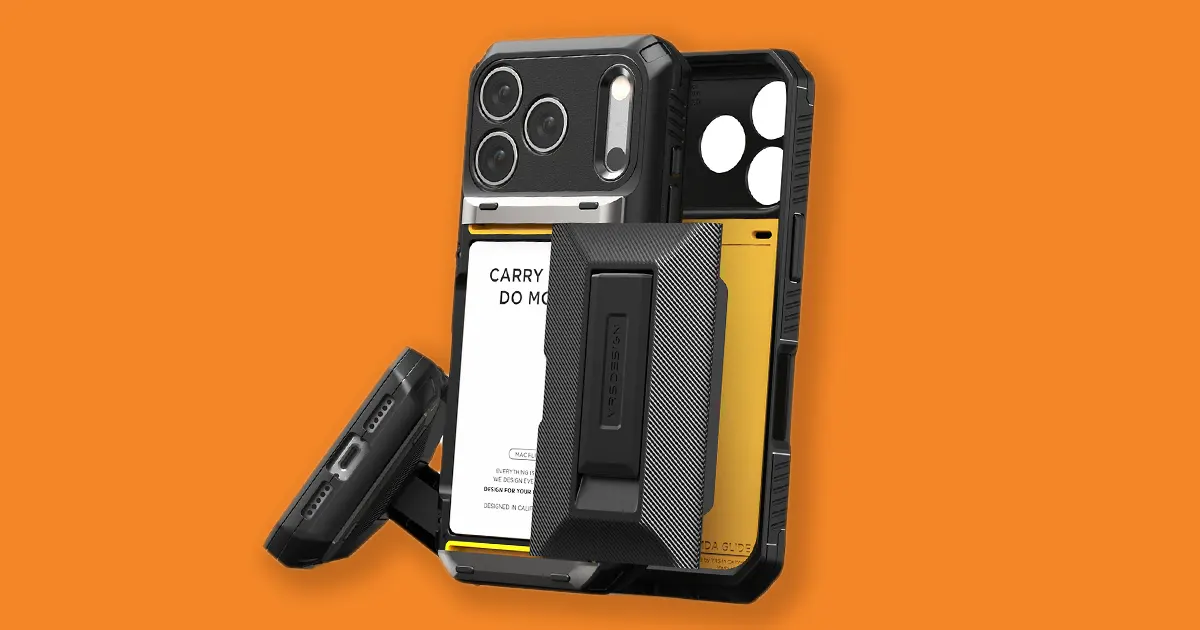
The iPhone 17 Pro Max is a serious piece of hardware. It costs serious money. And if you’re anything like me, you’ve also been quietly fantasizing about ditching your wallet for good — just your phone, a couple of cards, and out the door.
I’ve been reviewing phone accessories since 2021, and I’ve learned one thing the hard way: most “wallet cases” on the internet look great in photos and fall apart in real life. Cards slip out. Cases crack at the corners. The card slot stretches after two weeks and suddenly your debit card is loose in your pocket somewhere.
So when I upgraded to the iPhone 17 Pro Max, I didn’t just Google for five minutes and pick the first Amazon result. I spent the better part of a week going through 12 different cases — reading specs, watching teardown videos, crawling Reddit threads on r/iphone and r/malelivingspace, and cross-referencing real buyer reviews on Amazon, Best Buy, and VRS Design’s own site.
This is what I found.
What to Look for in a Card Holder Case (Before You Buy Anything)
Before I get into the specific cases, here’s the buying framework I use. Skip this if you already know what you want — but if you’ve been burned by a bad case before, read it.
Card slot mechanism — this matters more than anything else. There are three types: manual slots (you push the card in and pull it out by hand), semi-automatic slots (you slide a lever and the card pops out), and folio/flip covers (the entire front of the case flips open like a wallet). Manual slots are the simplest and most reliable. Semi-auto is faster for daily use but has a sliding mechanism that can wear out. Folio cases offer the most card capacity but add the most bulk and block wireless charging.
TPU vs polycarbonate vs leather. TPU (thermoplastic polyurethane) is the soft, grippy material used on most rugged cases. It absorbs shock well. Polycarbonate (PC) is the hard plastic shell — good for structure. The best cases combine both: a PC shell with TPU edges. Leather looks beautiful but offers less drop protection and ages unpredictably.
RFID blocking — do you actually need it? Yes, in 2026, contactless card skimming is a real (if rare) threat in crowded transit hubs and markets. RFID-blocking cases contain a metallic layer inside the card slot that blocks the 13.56 MHz frequency used by most contactless payment cards. It adds no bulk and costs nothing extra on a good case. Always look for it.
MagSafe compatibility. Most integrated wallet cases block wireless charging because the cards and case materials interfere with the inductive charging signal. If you use a MagSafe charger on your desk or nightstand daily, this matters. If you primarily charge via USB-C, it matters less. Some cases (Apple’s own MagSafe Wallet, Peak Design) solve this with a detachable system — but those introduce their own tradeoffs.
Card capacity vs. bulk trade-off. Every card you add to a phone case adds roughly 0.8mm of thickness. Two cards is nearly invisible. Four cards starts to feel it. Five or more and you’re basically carrying a wallet on your phone — which defeats the purpose of going minimal.
The 4 Cases I Seriously Considered
After narrowing 12 options down to a shortlist, these four made the final cut.
1. Smartish Wallet Slayer Vol. 2 — $34.99
Smartish has built a cult following for good reason. The Wallet Slayer Vol. 2 is one of the cleverest case designs I’ve seen: it uses a spring-loaded slot that holds 1–3 cards plus some folded cash, with textured sides that make the phone feel secure in hand, and air-pocket corners designed to absorb drop impact. The standout feature is the built-in kickstand — it uses your card itself as the stand leg, which means no hinge, no moving parts, and no piece of plastic to snap off.
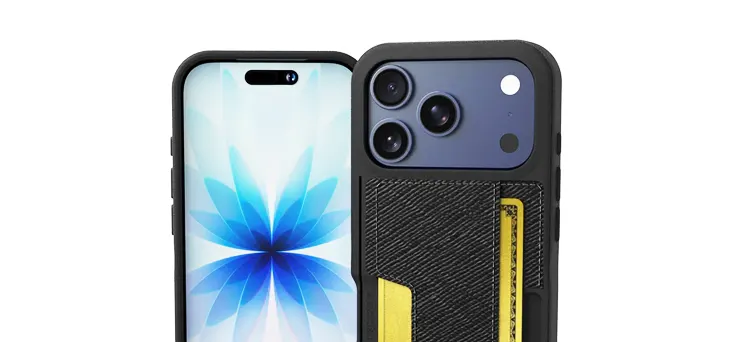
What I liked: The spring mechanism is genuinely satisfying to use. The build quality feels premium at this price. The card-as-kickstand idea is the kind of elegant engineering detail that makes you smile.
Why I didn’t order it: It doesn’t support MagSafe or wireless charging. I have a MagSafe charger on my desk and one on my bedside table. Switching to cable-only charging for the sake of a case felt like a bigger lifestyle change than I was willing to make.
Best for: Anyone who charges via USB-C and wants maximum cleverness in a slim package.
2. Apple MagSafe Leather Wallet — Premium pricing
Apple’s own solution looks gorgeous. It’s real leather, it attaches magnetically to the back of any MagSafe-compatible case, holds up to 3 cards, and detaches intentionally when you need it. The Find My integration — which alerts you if the wallet gets separated from your phone — is a genuinely useful safety net.
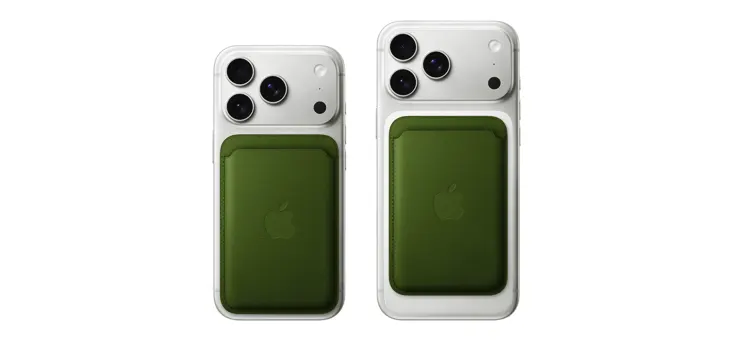
What I liked: The design is beautiful. The Find My feature is smart. It works with any MagSafe case, so you’re not locked into one ecosystem.
Why I didn’t order it: It’s not a case — it’s an accessory. You still need a separate case for drop protection, which means you’re carrying two attached products instead of one integrated one. And the magnetic attachment, while strong, has been known to detach in a deep jacket pocket when the phone brushes against fabric. I’ve heard enough stories of people losing it on the metro to make me nervous.
Best for: People who already have a great protective case and just want to add card storage without bulk.
3. Oterkin Wallet Case (Amazon, ~$18) — Budget pick
I spent a full hour on Amazon at midnight looking at options like the Oterkin, which promises 4–5 card slots, RFID blocking, a kickstand, full camera protection, and military-grade drop protection for under $20. On paper, it’s unbeatable value.
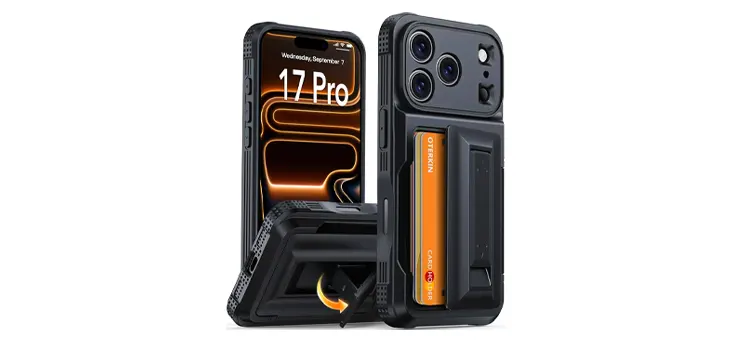
In practice, the reviews told a more honest story. Phrases like “card slot stretched after a month,” “the kickstand snapped,” and “feels like cheap plastic” came up repeatedly. The RFID blocking on budget cases is often just a thin metallic sticker inside the slot rather than a properly integrated shield — it may or may not work reliably.
What I liked: The price. The feature checklist is genuinely impressive for $18.
Why I didn’t order it: When a case is protecting a $1,200+ phone, I don’t want to gamble on materials quality. The long-term durability reviews just weren’t there.
Best for: Short-term use, secondary phones, or if budget is the hard constraint.
4. VRS Design Damda Glide Hybrid — $29.99 ( THE ONE I ORDERED )
This is the one I kept coming back to, no matter how many alternatives I found.
VRS Design (also known as Verus, founded in South Korea) has been making the Damda Glide series for years. What got my attention wasn’t the specs — it was the loyalty. On their own product page, reviewers would write things like “I’ve used VRS cases since my iPhone 13 Pro, traded in my phone in mint condition, and immediately ordered this for my new phone before taking it out of the box.” That’s the kind of long-term real-world feedback you can’t fake.
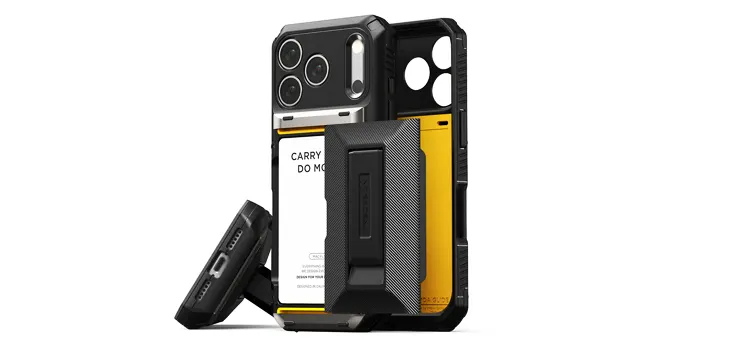
The Damda Glide Hybrid for the iPhone 17 Pro Max features a dual-layer construction — a hard polycarbonate outer shell combined with TPU inner edges for shock absorption. The semi-automatic card slot holds up to 4 cards (I’m using it for my debit card, metro card, and national ID — two days in and the mechanism still feels solid and precise). There’s a built-in kickstand that works independently of the cards, which I’ve been using for video calls. And RFID blocking is built into the card tray itself, not just a sticker.
At $29.99 in Matte Black, it doesn’t draw attention to itself. It just does its job.
What I liked: The semi-auto mechanism is fast — one thumb push and the card is halfway out. The dual-layer build genuinely feels like it could survive a drop. The kickstand is sturdy. The Matte Black finish doesn’t show fingerprints. It sits flush against a flat surface without wobbling.
The trade-off I accepted: Like almost every integrated wallet case, it doesn’t support wireless charging. Cards block the MagSafe signal. I’ve moved my bedside charging to USB-C and honestly adjusted within a day — it’s not a big deal.
Update: After 2 Weeks of Daily Use
Added June 2, 2026
The case arrived two days after ordering, packaged neatly in a slim box. First impressions: it’s lighter than I expected for how protective it feels. The semi-auto card slot required a slight break-in period — the first few days it needed a firm push to release, but by day four it was smooth and responsive.
I’ve used it through a full week of commuting on the metro (where I tap my transit card multiple times daily), a weekend trip to a busy market, and three drop incidents — two from desk height, one from hip height onto tile. The phone is completely unscathed. The case has a small scuff on one TPU corner from the tile drop, which is exactly what the TPU is supposed to do — absorb the impact so the phone doesn’t have to.
The RFID blocking works as advertised: I tested it by trying to scan my cards through the case with a contactless reader app and got no read. My debit card, transit card, and ID are snug, accessible in under a second, and completely secure.
If I had one complaint: the camera bump protection could be slightly higher around the lens cluster. It offers a raised lip, but if you lay the phone flat on a rough surface, the lenses are closer to contact than I’d like. A tempered glass lens protector (I use the Ailun set, ~$9) fully solves this.